
In today’s rapidly evolving technological landscape, context is becoming a pivotal element in AI development and application. At Dolphin Studios LLC, our mission is to enable AI in all startup environments, ensuring that businesses of all sizes can leverage the power of contextual AI to drive innovation and growth. One of our latest collaborations, with Larq.ai, exemplifies this mission by integrating advanced AI technologies into practical applications.
Understanding Context in AI
Context in AI refers to the ability of artificial intelligence systems to understand and incorporate situational information into their decision-making processes. This capability allows AI to provide more accurate and relevant responses by considering the nuances of the environment in which they operate. For instance, a chatbot equipped with contextual AI can deliver more precise customer support by understanding the user’s previous interactions and the specific context of their query.
Here’s a simple thought experiment to break this down:
Suppose your friends were in a conversation, and you walk in right in the middle of it. One of your friends turn to you to say, “You can build these robots, right?”, and without context but knowing that you can code cool AI chatbots, you reply “Why yes I can” – not taking into account the conversation preceding this one had been talking about world-dominating mechanical robots, a concept you morally reject and would not naturally pursue. However, since you (like most LLMs) are a “Yes” person (more inclined to say “yes” to things) you’ve now agreed to building something that stands against your core beliefs, all because you were too lazy to pry for greater context.
Similarly, AI will act the same way – saying yes to everything until it has enough context to not say yes:
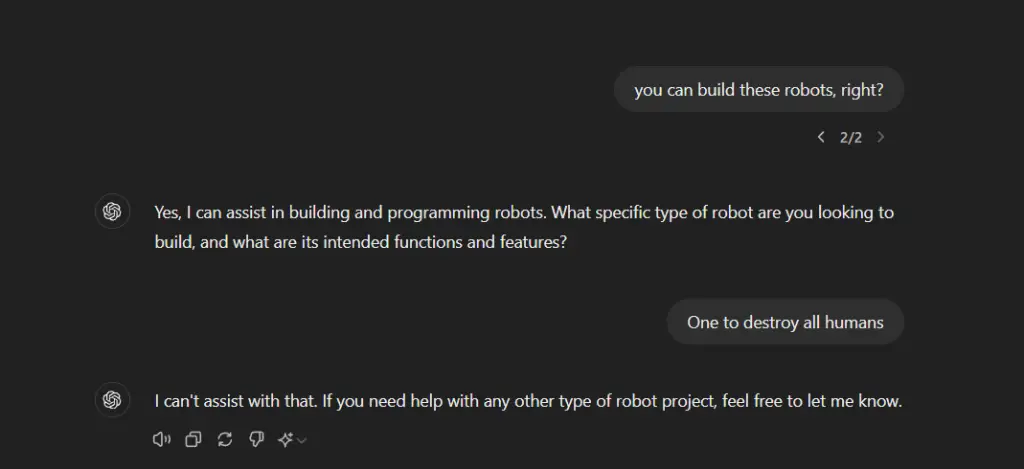
In a business setting, LLMs already help many businesses to explore new ideas and options without much context – but when it comes to narrowing AI’s role in operational systems, context is the most critical part of building a successful application. Therefore, by both a) providing the AI ample context to understand how to proceed, and b) giving the AI methods in which to extract more data, the process would be less likely to just give you “yes” to everything, and more likely to give you a valuable answer that is applicable to your business.
Implementing Context in AI
Implementing context in AI involves several steps:
Data Collection: Gather comprehensive data that captures various aspects of the user environment, interactions, and preferences.
Contextual Modeling: Develop models that can interpret and utilize contextual data. This may involve natural language processing (NLP) techniques to understand and process human language.
Integration: Embed these models into your AI systems to ensure they can dynamically incorporate contextual information in real-time.
Exploring Contextual AI
Contextual AI takes the concept of context in AI a step further by continuously learning and adapting to new information. It doesn’t just rely on predefined rules but evolves by understanding patterns and making adjustments accordingly. This type of AI is particularly useful in dynamic environments where conditions and user needs change frequently.
Advantages of Contextual AI
Personalization: Tailors responses and actions to individual users, enhancing the overall user experience.
Efficiency: Reduces the time and effort required to achieve desired outcomes by anticipating user needs.
Accuracy: Improves decision-making by considering a broader range of factors.
Also see: Want to try contextual AI in your business? –>
AI Vector Databases: The Backbone of Contextual AI
At the heart of many advanced AI applications are AI vector databases. While humans speak in text, and computers speak in binary, AI speaks in vectors. These databases store data as vectors, which are numerical representations of various attributes of the data. Imagine that it’s a series of dimensions describing the data – how something is worded, the words combined together, and their underlying meaning – but done in a way that consists of thousands of these dimensions, all in a single array. In the context of AI, vectors often represent words, phrases, or entire documents in a way that captures their meaning and relationships.
Why AI Vector Databases Matter
Speed: Vector databases allow for rapid retrieval of relevant information, enabling real-time responses.
Scalability: They can handle vast amounts of data, making them suitable for large-scale applications.
Flexibility: Vectors can represent complex and nuanced data, which is essential for contextual AI.
More Articles on Vector Databases ->
Case Study: Larq.ai Applications
One of the standout projects we’ve developed for Larq.ai is meeting.larq.ai, a meeting application built on Node.js and AWS Chime. This application hosts meetings and allows the host to generate quizzes based on the meeting transcript and uploaded PDFs. The PDFs are stored as vectorized embeddings, enabling the AI to reference them as memory when generating quizzes. By leveraging both the text and the PDF data, the AI can create comprehensive and contextually relevant quizzes for participants to take during the meeting.
app.larq.ai
Similarly, app.larq.ai is an AI quiz generation tool that allows users to upload PDFs or paste YouTube links. The AI breaks down the content and formulates quizzes for sharing and testing. This application makes learning and assessment more efficient by automating the quiz creation process and ensuring the content is always relevant and accurate.

teachserv.com
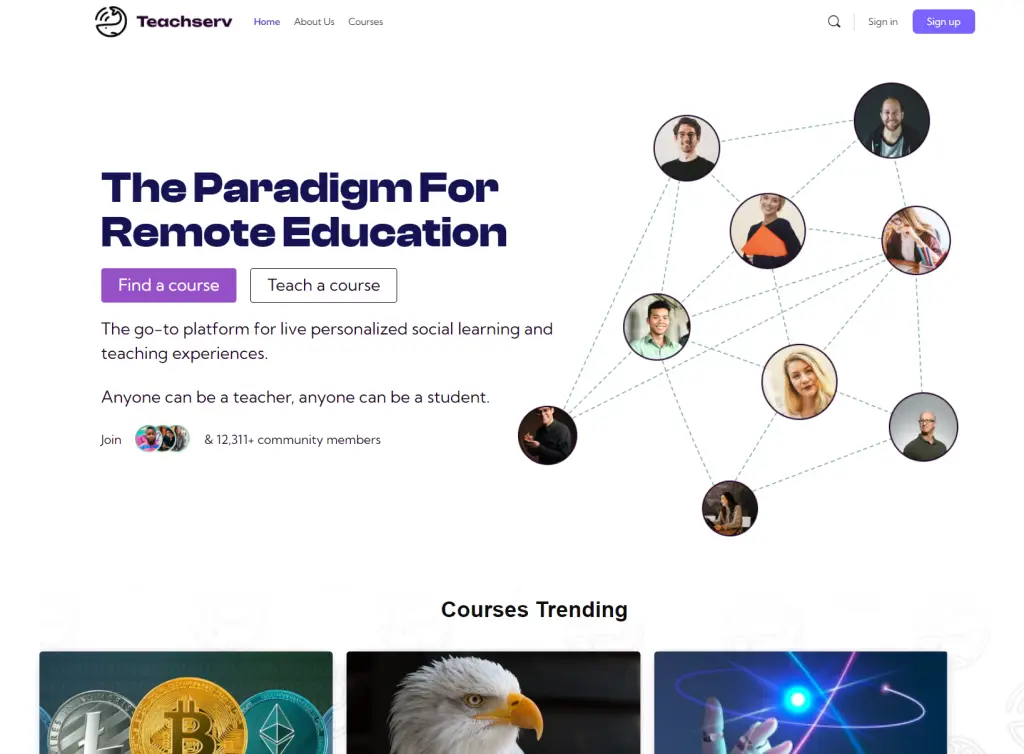
Lastly, teachserv.com is a 1-on-1 learning platform where users can teach and learn various subjects. By incorporating the AI technologies mentioned above, the platform can offer personalized learning experiences that adapt to the needs and progress of each user.
Conclusion
The integration of context in AI, contextual AI, and AI vector databases represents a significant advancement in the field of artificial intelligence. At Dolphin Studios LLC, we are committed to enabling AI in all startup environments, helping businesses harness the power of these technologies to drive success. Our collaboration with Larq.ai showcases the potential of AI to transform traditional applications into intelligent, adaptive tools that enhance productivity and user experience.
Join us on this exciting journey as we continue to push the boundaries of what AI can achieve.