
Large Language Models (LLMs) are opening new frontiers in manufacturing by automating knowledge-intensive tasks. Below is a practical guide to several industry-specific use cases that resonate with operations, IT, and executive stakeholders. Each use case includes how the LLM works (inputs/outputs), where it fits in the process, and the clear business benefits in terms of cost, time, quality, and safety.
Automating SOP Generation and Updates
Manufacturing companies can leverage LLMs to create and maintain Standard Operating Procedures (SOPs). The model is fed with inputs like existing process docs, engineering notes, and regulatory guidelines, and then outputs a polished SOP draft ready for human review. This fits into the process whenever a new SOP is needed or an update occurs – for example, after a design change or continuous improvement initiative. Quality or engineering teams use the LLM’s draft as a starting point and then approve and deploy the SOP on the shop floor. Benefits: By automating SOP writing, manufacturers cut documentation time while ensuring compliance. LLM-driven SOP generators can convert existing documents into standardized formats, enforce consistent terminology, and even incorporate checks for regulatory requirements. This means fewer errors and omissions in procedures, which improves safety and quality. It also frees up engineers’ time – instead of spending hours writing routine docs, they can focus on process improvements. In regulated industries, faster SOP updates prevent compliance delays (avoiding downtime waiting for paperwork). For example, a medical device manufacturer could automatically generate assembly SOPs that meet FDA guidelines, reducing manual effort while staying audit-ready. Overall, this use of LLMs leads to faster, more consistent work instructions and lower documentation costs.
- Inputs: Existing SOPs or process notes, change orders, best-practice templates, and any regulatory or safety requirements.
- Outputs: Complete SOP documents or revisions in the company’s standard format (including steps, safety cautions, etc.), ready for review.
- Integration: Triggered during new process rollout or whenever a procedure changes. The LLM drafts the SOP, which is then reviewed by a process engineer or quality manager before release. Version control and approval workflows remain in place (the LLM simply accelerates the content creation).
- Benefits:
- Speed & Efficiency: Dramatically reduces the time to produce or update SOPs (hours or days saved per document).
- Consistency & Compliance: Ensures all procedures follow a standard structure and include required safety/regulatory content (shakudo.io), reducing the risk of missing critical steps.
- Cost Savings: Fewer engineering hours spent writing docs translates to lower labor costs. Faster SOP deployment means less production waiting time (minimizing costly delays).
- Quality & Safety: Up-to-date, clear instructions lead to fewer process errors and accidents. SOP automation improves overall compliance with quality standards and OSHA/EPA requirements (full linkedin.com article).
Failure Diagnostics and Root Cause Analysis
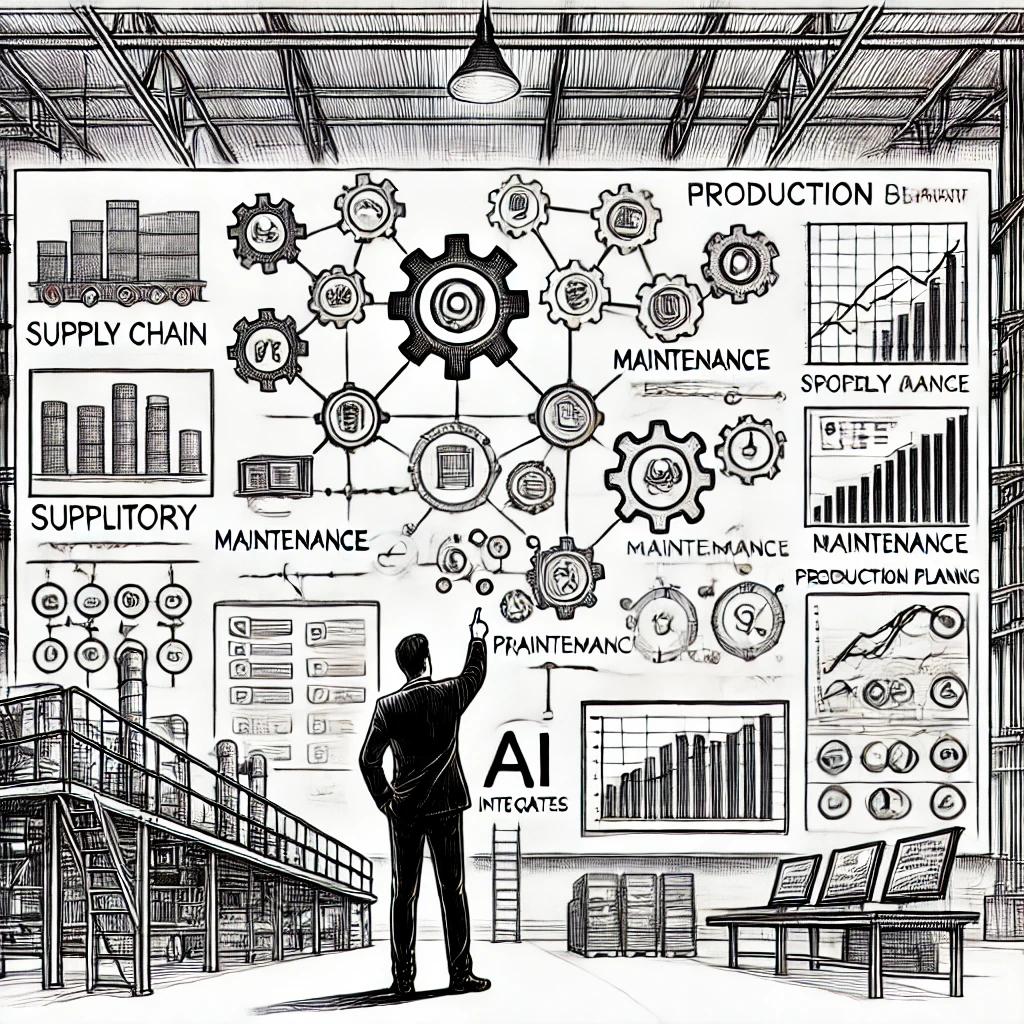
Identifying why a machine failed or a defect occurred is often like searching for a needle in a haystack of maintenance logs, error codes, and expert knowledge. LLMs can serve as virtual maintenance assistants to speed up failure diagnostics and root cause analysis. The LLM ingests inputs such as equipment manuals, past incident reports, sensor readings, and real-time error messages. Operators or engineers then interact with the LLM by describing a problem in natural language (e.g. “The injection molding machine overheated and shut down with code X”). The LLM analyzes this against its knowledge base and outputs probable causes or troubleshooting steps. This tool fits into the maintenance process whenever a breakdown or anomaly occurs: instead of flipping through thick manuals or calling a senior expert, the technician queries the LLM assistant. Benefits: The most immediate benefit is reduced downtime – the LLM helps pinpoint issues faster, so machines get back online sooner. It can sift through maintenance logs and manuals in seconds to surface relevant information that a human might take hours to find (reference: arundo.com)
For example, if a certain pressure valve failure has happened before, the LLM might recall that history and suggest “check Valve A for clogging, as this caused an overheating shutdown last month.” This accelerates root cause identification. It also captures expert knowledge: even if a veteran engineer retires, their past troubleshooting notes (if given to the LLM) remain accessible. From an IT perspective, this use case involves integrating the LLM with existing maintenance systems and data logs, but it’s increasingly feasible with secure enterprise AI platforms. The business value is clear – faster repairs, less unplanned downtime, and lower scrap/rework from recurring issues. In addition, finding root causes quickly helps improve safety (addressing the true issue prevents future accidents) and quality (solving underlying process problems that affect product quality).
- Inputs: Real-time machine alerts, sensor data, historical maintenance logs, equipment manuals, and knowledge from prior failure cases.
- Outputs: Likely root causes of the failure, suggested diagnostic checks, and recommended fixes or next steps (in plain language). For complex issues, the LLM might output a ranked list of possibilities with confidence levels.
- Integration: Used by maintenance teams during troubleshooting. The LLM can be accessed via a chat interface on a tablet or laptop in the factory, or even via voice. It may be integrated with a CMMS (Computerized Maintenance Management System) so it can pull relevant history automatically.
- Benefits:
- Reduced Downtime: Speeds up troubleshooting by quickly narrowing down causes – critical for keeping production lines running (every minute of downtime costs money).
- Knowledge Retention: Centralizes tribal knowledge and past fixes, making even less-experienced technicians more effective. The LLM “remembers” prior incidents and solutions.
- Cost Savings: Avoids unnecessary part replacements or service calls by correctly identifying issues the first time. This cuts maintenance costs and prevents excessive inventory of “just in case” spare parts.
- Improved Safety: Rapid root cause analysis helps address the underlying issues that could lead to safety incidents. For example, if the LLM flags a likely cause related to a pressure anomaly, maintenance can fix it before a hazardous failure occurs.
- Continuous Improvement: By analyzing patterns in failures, the LLM can highlight systemic problems (e.g. a design flaw or improper usage) so engineering can implement long-term fixes, improving reliability.
Summarizing Machine Logs and Production Data
Industrial equipment and sensors generate huge volumes of log data – temperature readings, error codes, cycle times, and more. Manually combing through these logs is time-consuming, but an LLM can act as a smart log analyst. In this use case, the LLM’s input is raw text from machine logs or production system exports (which often read like technical gibberish). The LLM outputs a concise summary or insight: for example, “Machine #12 experienced 3 pressure spikes and a 2-minute downtime at 14:32, but resumed normal operation. No operator intervention noted.” This summarization can be done on-demand (say, an engineer asks the LLM “What happened on Line 3 during the night shift?”) or automatically (the LLM generates a daily summary report each morning). It fits into operations by augmenting daily production meetings or shift handovers – instead of wading through log files, supervisors get a quick narrative of key events. It can also integrate with an MES (Manufacturing Execution System) or SCADA data historian: the LLM can parse those logs and highlight anomalies. Benefits: This provides situational awareness at a glance. Operators can quickly identify if there were any issues in the last run – e.g. a pattern of minor faults that didn’t stop production but could indicate wear. Compared to traditional keyword searches or rule-based alerts, an LLM can understand context in the logs (it “reads” them like a report). As noted in one case, an LLM can comprehend log content far better than simple queries, avoiding false positives and picking out relevant events. The result is time saved for engineers (who might otherwise spend hours each week on log review) and potentially improved equipment effectiveness – small issues are caught and addressed before they escalate. From an IT view, this involves feeding log data (which may be sensitive) to the LLM in a secure way, but many emerging platforms allow on-premises or private cloud deployment for this. The business value comes from efficiency (automating tedious data analysis), higher quality (detecting anomalies affecting product quality), and safety (catching abnormal conditions early). For example, if an LLM summary of an oven’s log shows temperature fluctuations beyond spec, engineers can fix it before it results in defective parts or a safety hazard.
- Inputs: Raw machine log files, alarm histories, PLC/SCADA records, or MES data dumps – typically time-stamped text entries or numeric readings. The more historical data the LLM has, the better it can judge what’s “normal.”
- Outputs: A human-readable summary of the log data. This could be a paragraph highlighting significant events, a list of any anomalies detected, or answers to specific questions (e.g. “Was there any downtime on Machine X yesterday?”).
- Integration: Can be integrated into dashboards or chat interfaces. For instance, after a production run, the LLM could automatically email a shift summary. Alternatively, an engineer can query the LLM via a messaging app integrated with the log database. It may run on a schedule (daily digest) or be triggered by specific events (summarize logs when an alarm triggers, to assist in real-time).
- Benefits:
- Time Savings: Automates the analysis of lengthy logs, freeing engineers from manually reading hundreds of lines of data. This can save many man-hours per week.
- Better Decision-Making: Provides quick insights into operations. Managers get a clear picture of what happened and can make informed decisions or adjustments promptly.
- Early Anomaly Detection: The LLM may spot subtle trends (e.g. increasing cycle time or minor faults clustering at a certain time) that might be overlooked. This supports predictive maintenance and prevents quality issues.
- Improved Communication: Shift changes and reports become easier – the outgoing shift can hand over an LLM-generated summary to incoming staff, reducing miscommunication.
- IT/OT Integration: This use case showcases how IT (information technology) and OT (operational tech) converge. It makes factory data more accessible across the organization, including to executives who might not interpret raw data but can understand a summary.
Analyzing Supplier Quality Trends
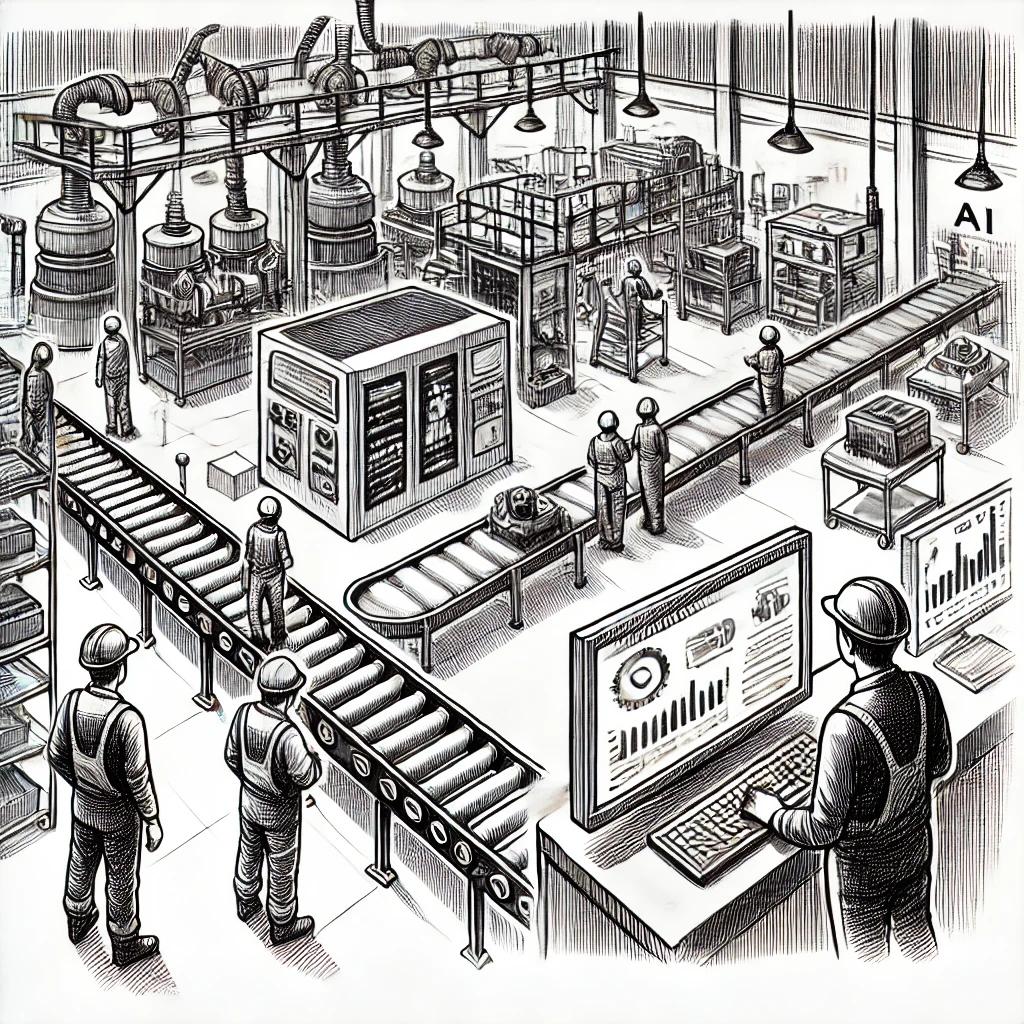
Maintaining high quality in incoming materials and components is crucial for manufacturers. LLMs can help by analyzing supplier-related quality data to find trends and insights. The inputs to the LLM might include supplier inspection reports, incoming defect logs, supplier audit notes, and even free-form text from supplier communications or complaints. The LLM processes this data and outputs useful analyses – for example, a summary such as “Supplier Z had an increase in defects from 2% to 5% in the last 3 months, primarily paint adhesion issues,” or answers to questions like “Which suppliers showed improvement or decline in quality this quarter?” This fits into the supplier quality management process by acting as an assistant to the procurement and quality teams. Instead of manually compiling data from various spreadsheets and systems, the team can use the LLM to generate supplier scorecards, trend reports, or even draft emails to suppliers about issues. Benefits: For operations and quality managers, this means faster and more proactive supplier management. The LLM can quickly flag potential issues – perhaps it notices that material from Supplier A often causes line slowdowns due to extra rework. Those insights let the team address problems with the supplier before they worsen (preventing costly production delays or scrapped product). Executives benefit from a clearer overview of supplier performance and risk. According to industry use cases, NLP-driven tools can digest supplier data and “identify potential issues” in supplier relationships automatically (reference: ey.com)
. This leads to better decision-making – e.g. deciding whether to qualify a backup supplier if one is trending down in quality. Cost-wise, improved supplier quality directly reduces internal scrap and warranty claims. It also strengthens the supply chain by avoiding disruptions (since quality issues can be early indicators of deeper supplier problems). For IT, integrating an LLM here might involve connecting it with the QMS (Quality Management System) or ERP procurement module, which is feasible with modern APIs. Overall, this use case drives higher incoming material quality, reduces production defects, and supports supplier development with data-driven insights.
- Inputs: Supplier quality metrics (PPM defect rates, lot rejection reports), textual reports from incoming inspection, supplier audit findings, delivery records, and even emails or support tickets related to supplier issues.
- Outputs: Summaries of supplier performance (trends, rankings, and outliers), alerts about statistically significant changes in quality, and natural-language explanations of data (e.g. “Supplier B’s last 5 shipments were late and showed a rising defect trend in plastic moldings”). It could also draft recommended actions, like suggesting which supplier to audit next.
- Integration: Typically used in periodic supplier reviews or continuous monitoring. The LLM could be integrated into a supplier quality dashboard – when a user clicks a supplier, it generates a narrative analysis. It might also be used ad-hoc by procurement managers via a chat query (“How does Supplier X compare to Supplier Y on defect rates?”). Integration with procurement and quality systems ensures it has up-to-date data.
- Benefits:
- Proactive Quality Management: Early detection of negative trends allows the company to engage the supplier for corrective action before it affects production. For example, catching an increase in component failures early can prevent a line shutdown later.
- Time Savings: Automates the aggregation of supplier data. What might take an analyst days to compile and interpret can be done in seconds by the LLM, enabling more frequent and thorough supplier evaluations.
- Improved Supplier Relationships: By identifying issues and improvements objectively, discussions with suppliers can be more constructive. The LLM might also highlight positive trends (e.g. “Supplier C improved defect rate by 15% after process change”), which builds trust.
- Cost & Quality Gains: Fewer bad parts entering the production line means less rework, scrap, and warranty cost. Ensuring high supplier quality contributes to end-product excellence and customer satisfaction.
- Executive Insight: Leadership gains a clearer picture of supply chain risks and performance. LLM-generated summaries can be included in management reports, translating raw KPIs into plain language insights about supplier stability and quality impact on the business.
LLMs leverage natural language processing to gain insights from supplier communications and data points, helping identify potential issues and improve supplier relationships (reference: ey.com). This means the model can read through all the text and data related to suppliers and highlight where attention is needed, acting as an ever-vigilant quality analyst scanning for risks.
Generating Training Content and Job Aids
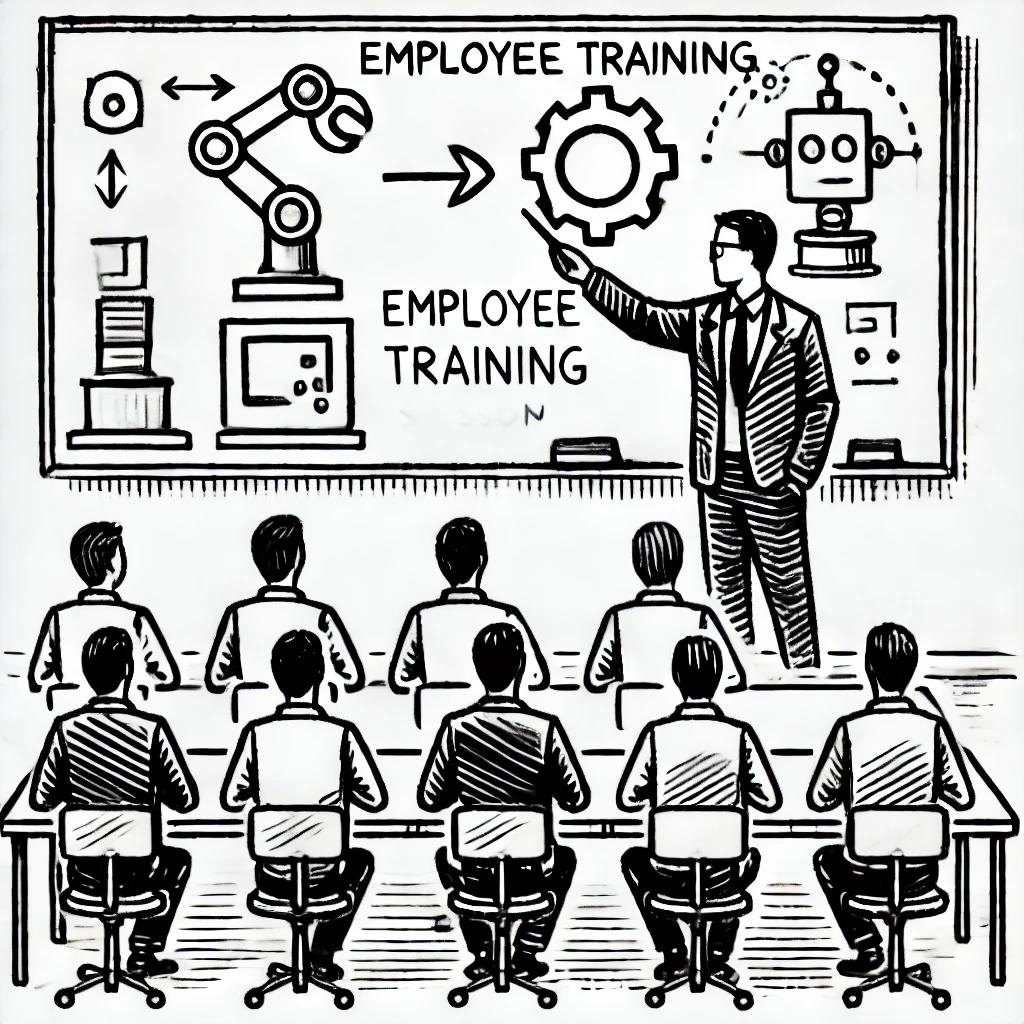
High workforce turnover and new technology in manufacturing require constant training and upskilling of operators. LLMs can assist by generating training materials and job aids on demand. The inputs can be technical documents (equipment manuals, process descriptions) or even just prompts describing a task, and the LLM outputs useful training content – such as step-by-step work instructions, quick reference guides, quizzes, or even simplified explanations of complex concepts. For example, if a new CNC machine is introduced, an engineer could prompt the LLM with “Create a beginner-friendly setup guide for Machine X” and get a draft guide or checklist. This use case fits into the employee training and development process whenever new content is needed: onboarding new hires, rolling out new equipment, or reinforcing safety procedures. The LLM can also update existing training: e.g. generating a summary of “what changed” in a procedure for refresher training. Benefits: The obvious benefit is speed and scalability. Training managers can produce materials much faster, ensuring workers are trained on the latest processes without long lead times. According to industry insights, generative AI can instantly create training documentation, user guides, and more from simple prompts (reference: etq.com). This means a plant can respond quickly when, say, a process changes – the updated job aid is available almost immediately, reducing the risk of errors due to outdated instructions. Additionally, the LLM can tailor the content’s complexity to the audience (simplify language for a shop-floor operator vs. detailed theory for a maintenance technician). There’s also a consistency benefit: every piece of training content will follow the same style and cover all key points, which can improve comprehension and safety. From an executive perspective, this leads to faster onboarding (getting new hires productive sooner), fewer accidents or mistakes due to poor training, and overall a more flexible workforce. IT can integrate the LLM with the company’s Learning Management System (LMS) or intranet so employees can even ask the LLM questions (“How do I safely clean the extruder nozzle?”) and get an immediate answer or job aid. This effectively turns the LLM into a 24/7 training assistant. Overall, leveraging LLMs for training content generation improves knowledge transfer while saving time and cost on content development.
- Inputs: Existing training documents, standard work instructions, safety manuals, technical specs, and subject matter expert insights. In the absence of formal documents, even a prompt or outline from an expert can guide the LLM. Multilingual data can be included to have the LLM produce content in multiple languages for diverse workforces.
- Outputs: Various formats of training content – written SOP-style instructions, how-to articles, FAQs, troubleshooting guides, flashcards or cheat-sheets, and even scripts for training videos. The output can be formatted for print handouts or digital (HTML pages, PDFs).
- Integration: Typically used by training and HR departments or by line supervisors. The LLM might be integrated into an LMS such that whenever a new process is added, the system suggests “Auto-generate training material.” It can also be accessible via a chat interface for workers: e.g. an operator can ask the LLM a “how do I…” question and get an immediate answer drawn from the official procedures. All generated content should be reviewed by a human for accuracy, especially in safety-critical topics, before formal use.
- Benefits:
- Faster Onboarding: New hires can get up to speed quicker with readily available, easy-to-understand guides. This reduces the training time (and cost) per employee.
- Continuous Improvement in Skills: As processes change, updated training modules can be rolled out without delay, keeping the workforce’s knowledge current.
- Consistency in Training: Every shift and every plant receives the same quality of training content, which standardizes operations. LLMs ensure no important training point is skipped, and content is presented clearly.
- Multilingual Support: An LLM can generate training material in multiple languages effortlessly, improving safety and understanding for non-English-speaking workers (traditionally this would require professional translation).
- Reduced Strain on Experts: Often, seasoned operators or engineers have to spend time teaching others. With LLM-generated job aids, much of the basic training is handled, freeing experts to focus on higher-level mentoring or problem-solving.
- Safety and Quality: Well-trained employees are less likely to make mistakes. By improving the quality and accessibility of training, LLMs indirectly lead to safer operations and higher product quality (fewer errors due to misunderstanding procedures).
LLMs as Natural Language Interfaces for MES/ERP Systems

Manufacturing facilities run on complex software systems like Manufacturing Execution Systems (MES) and Enterprise Resource Planning (ERP) platforms. These systems contain a wealth of data (production schedules, inventory levels, quality stats), but accessing that data usually requires navigating clunky interfaces or running reports. LLMs can serve as a user-friendly interface to these systems: stakeholders can simply ask questions in plain language and get answers. The input is the user’s question or command (e.g. “What was yesterday’s scrap rate in the molding department?” or “Order more raw material if inventory falls below safety stock”). The LLM translates that into the necessary database queries or ERP transactions (through integration hooks), and then outputs the answer or executes the action, phrasing any response in natural language. This fits into daily operations for operators, supervisors, and even executives – it’s like having a smart assistant for the factory’s digital systems. For instance, an operator on the shop floor might speak into a handheld device, “Show me the maintenance history of Machine 5,” and the LLM will pull that info from the MES and read it out or display it in an easy format. Benefits: The primary benefit is ease of use and speed. Non-technical users no longer need to be trained extensively on how to use an ERP or run specific reports – they can just ask. This lowers the barrier to information, enabling faster decision-making. In fact, experts predict heavy integration of NLP conversational interfaces in the next few years, envisioning an “advanced Siri” for factory workers to get information via voice queries (reference: ecisolutions.com). Imagine a maintenance tech saying “Hey AI, do we have spare parts for the press brake?” and getting an immediate answer from the ERP inventory module. This saves time and reduces frustration. It also improves data accessibility; important metrics won’t remain siloed with analysts or IT – anyone authorized can retrieve them. From an executive viewpoint, this can increase the ROI of MES/ERP investments by boosting user adoption (if it’s as easy as chatting, more people will actually use the system’s data). IT departments benefit too: instead of creating dozens of custom reports or dashboards for every request, the LLM interface dynamically handles queries. In terms of feasibility, many vendors are already exploring such integrations, and feasibility is high. Overall, an LLM interface leads to better-informed decisions at all levels, time savings in information retrieval, and enhanced operational agility. A production worker uses a tablet – envision this as a chat interface to the MES/ERP, where they can ask about production data or initiate transactions easily. For example, integrating ChatGPT with ERP systems allows users to interact using conversational language, making it easier for non-technical staff to access and understand data, thereby improving operational efficiency
. In practice, this means a supervisor can simply ask, “What’s the current order status for job #123?” and the LLM will fetch and explain that status from the MES.
- Inputs: User queries in natural language, plus real-time data from MES/ERP (which the LLM can retrieve via APIs or pre-loaded knowledge). The LLM might also take into account user role and permissions as context (ensuring, for example, only managers can see certain financial data).
- Outputs: The information or action result requested – usually as a text answer. This could range from a single data point (“We have 120 units in stock for Part ABC.”) to a summarized report (“This week’s OEE is 85%, slightly below target, mainly due to downtime on Line 2.”). If integrated for commands, outputs could also be confirmation of actions taken (“Maintenance work order #456 has been created”).
- Integration: Sits as a layer on top of existing systems. This could be implemented via a chatbot in a web portal, a voice assistant in control rooms, or even within common communication tools (imagine asking the factory AI assistant in Microsoft Teams or Slack). The LLM needs secure connectors to systems like SAP, Oracle, or manufacturing databases to fetch data. Importantly, it should log any actions it takes (for traceability). Initially, companies might deploy this in read-only mode (Q&A) and later enable write-back capabilities (for executing transactions) as confidence grows.
- Benefits:
- User-Friendly Access: Employees at all levels can get the info they need without specialized training. This is especially helpful for front-line operators or maintenance techs who may not be comfortable with complex software – they can just ask in plain speech.
- Efficiency and Speed: Dramatically reduces the time to get answers. No more waiting for an office analyst to run a report or clicking through multiple screens; a question to the LLM yields instant data.
- Informed Decision-Making: When data is accessible on the fly, supervisors can make quick calls (e.g. adjusting production plans if they learn of a material shortage sooner). It also improves responsiveness to issues – if a quality problem arises, anyone can query how widespread it is by asking the system.
- Reduced Training and IT Burden: New managers can start querying the ERP via chat without weeks of software training. IT teams don’t need to develop as many custom user interfaces or reports for every information need – the LLM interface covers a broad range of queries naturally.
- Real-Time Insights for Executives: Executives on the move could query KPIs on their phone by asking the LLM, rather than digging through reports. This on-demand insight helps in strategic decisions and in meetings where an unexpected question comes up about operational data.
- Data Democratization: Overall, this use case democratizes access to MES/ERP data. When more team members can access and understand data, it fosters a data-driven culture. People are empowered to self-serve information and take initiative, rather than operating blindly or making guesses.
Conclusion: These examples demonstrate that LLMs are not science fiction for manufacturing – they are feasible today or emerging in early deployments, with tangible benefits. From auto-generating SOPs to serving as intelligent assistants for maintenance or as conversational UIs for factory systems, LLMs can reduce manual effort, surface insights, and improve responsiveness on the shop floor. The business value comes in many forms (cost savings, uptime, quality, safety, and speed) and resonates with different stakeholders: executives see productivity and competitive advantage, operations teams get practical tools that make daily work easier, and IT can enable advanced capabilities without starting from scratch. By carefully integrating LLM solutions into existing workflows – and validating their outputs – metal and plastics manufacturers can harness AI to drive the next wave of efficiency and innovation in the Industry 4.0 journey. The key is to start with high-impact, manageable projects (like the use cases above) and scale up from the successes, all while keeping human oversight in the loop. In doing so, manufacturers position themselves to work smarter, with AI as a cooperative partner on the factory floor.